The Ultimate Guide to Executive Functioning Skills for Kids
Does your child struggle to start their homework?
Do they constantly lose their shoes or forget their lunchbox?
Maybe they have big meltdowns when plans change suddenly.
If this sounds familiar, your child isn't being "difficult" or "lazy." They might be struggling with Executive Functioning Skills.
In the Greater Kansas City Area, many families come to Dr. Danielle's Developmental Services feeling frustrated. You want to help your child succeed, but the morning routine feels like a battle and schoolwork is a constant source of stress.
This guide will help you understand what these skills are, why they matter, and how we can work together to make daily life smoother for your family.
What is Executive Functioning?
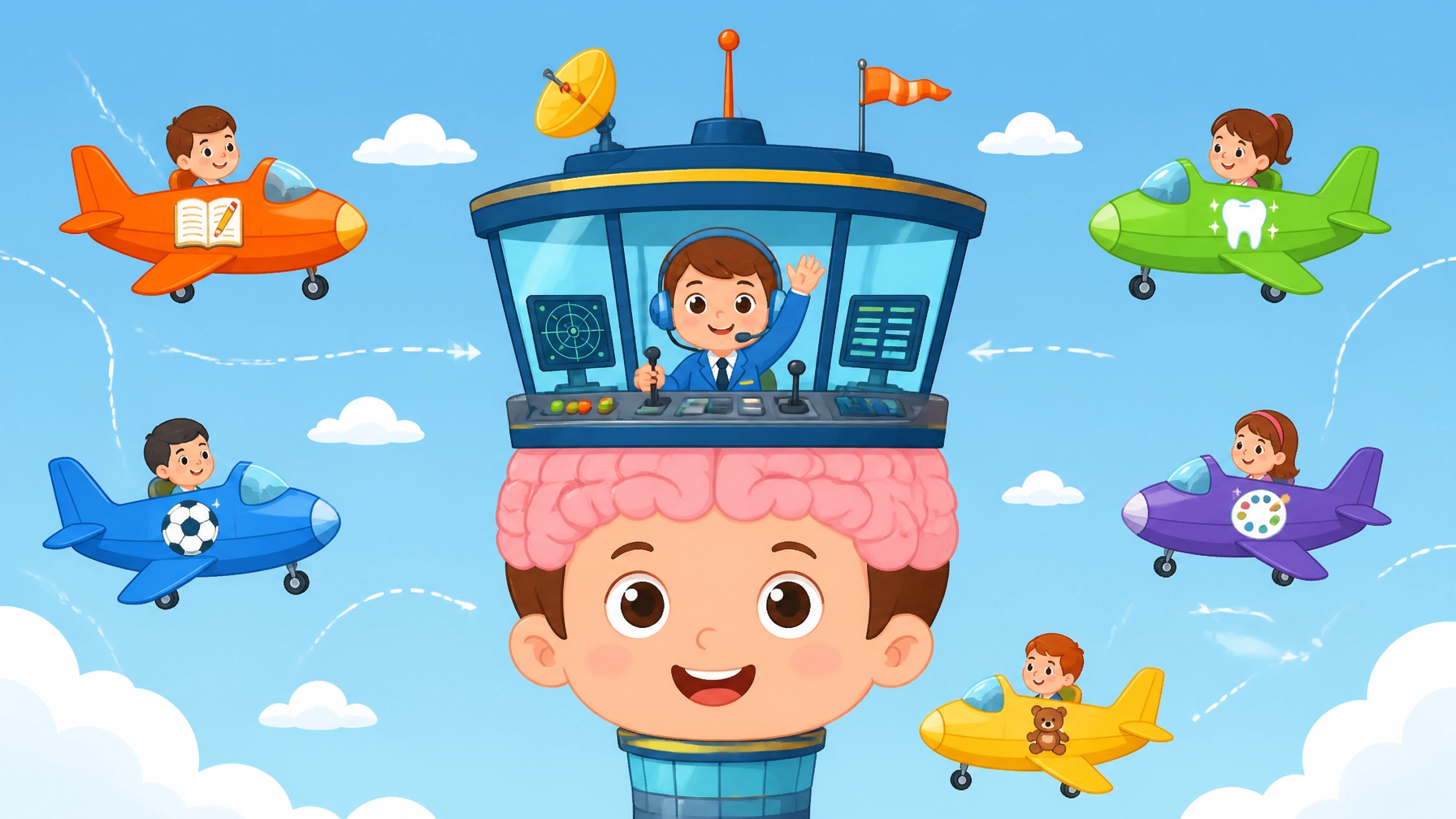
Think of executive functioning as the "Air Traffic Control" system of the brain.
Just like a controller manages dozens of planes landing and taking off, these mental skills help your child manage their thoughts, actions, and emotions. They are the processes that carry a child from a "good idea" to a "finished action."
For kids with ADHD, autism, or developmental delays, this air traffic control tower might be a little overwhelmed. The signals get crossed, or the planes (tasks) stay stuck on the runway.
The "Big 8" Executive Functioning Skills
Executive functioning isn't just one thing. It is a set of eight core skills. Understanding which ones are hard for your child is the first step toward helping them.
1. Impulse Control (Inhibition)
This is the "pause button." It helps your child think before they act. Kids who struggle here might blurt out answers, touch things they shouldn't, or act without considering the consequences.
2. Emotional Regulation
This is the ability to manage feelings to achieve a goal. If a child can't regulate their emotions, a small mistake on a drawing can lead to a full-blown meltdown that ends the activity entirely.
3. Task Initiation
Have you ever seen your child stare at a worksheet for 20 minutes without picking up a pencil? That is task initiation. It is the ability to just get started on something, especially if it feels boring or hard.
4. Working Memory
This is the brain's "sticky note." It helps your child hold onto a piece of information while they use it. If you tell your child, "Go upstairs, get your socks, and bring down your library book," and they come back down with only one sock and no book, their working memory likely "ran out of space."
5. Planning and Prioritization
This helps your child decide what is most important and create a roadmap to get it done. Without this skill, a big school project feels like an impossible mountain instead of a series of small steps.
6. Organization
This is the ability to keep track of information and physical things. A messy backpack, a lost coat, or a desk covered in loose papers are classic signs of organization struggles.
7. Cognitive Flexibility (Flexible Thinking)
This is the "pivot" skill. It helps your child adapt when things change. If the playground is closed and your child can't handle going to the library instead, they are struggling with flexibility.
8. Self-Monitoring (Metacognition)
This is the ability to look at your own work and behavior. It helps a child ask, "How am I doing? Am I following the rules? Did I finish the whole page?"
Why Executive Functioning is Hard for Some Kids
Executive functions are managed by the frontal lobe of the brain. This area develops significantly during childhood and through the early 20s.
For kids who are neurodivergent (like those with ADHD or autism), the frontal lobe often develops on a different timeline. This creates a "skill gap." They might be as smart as their peers, but their ability to execute that intelligence is lagging.
It is important to remember: Executive function issues are a "can't," not a "won't." Your child isn't choosing to be disorganized; they simply haven't built the "brain muscles" yet.
How Occupational Therapy Can Help
At Dr. Danielle's Developmental Services, we don't just "drill" these skills. We look at the whole child. Our goal is to make daily life in your Kansas City home more peaceful and successful.
Occupational Therapy (OT) helps by:
- Building Awareness: We help kids recognize when they are getting frustrated or "stuck."
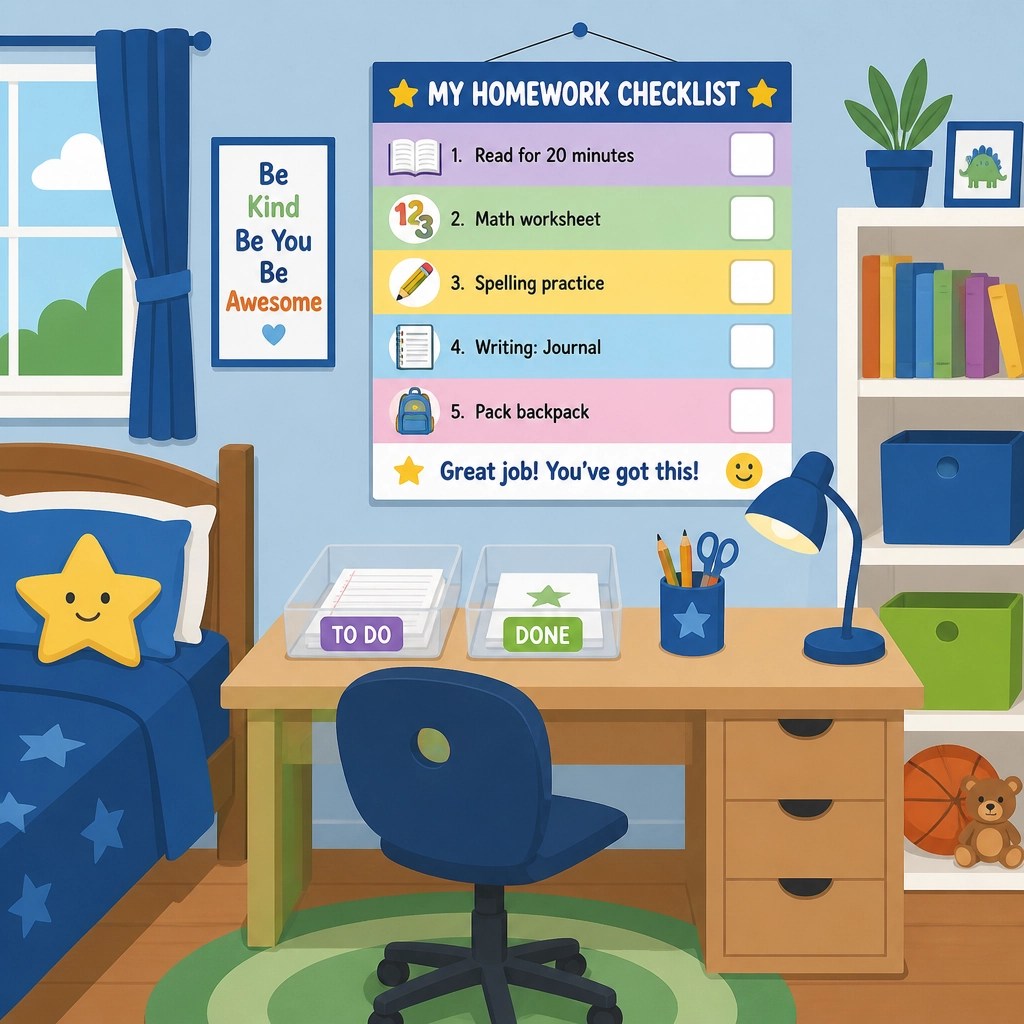
- Providing Tools: We teach children to use visual timers, checklists, and sensory strategies.
- Environmental Support: We show you how to set up your home to reduce the "mental load" on your child.
- Skill Training: Using evidence-based frameworks like the CO-OP approach (Goal-Plan-Do-Check), we help kids solve their own problems.
If you’ve noticed your child struggling with these areas, you can learn more about our evaluation and intervention services to see how we can support your family.
Practical Tips You Can Use at Home Today
You don't have to wait for an appointment to start helping. Here are a few simple strategies to try tonight:
Create a Visual Schedule
Time is invisible. Kids with weak executive function can't "feel" how long 10 minutes lasts. Use a visual schedule with pictures or icons to show exactly what needs to happen and in what order.

The "First-Then" Rule
Keep it simple. Instead of a long list of chores, use "First-Then" language. "First, put your shoes on. Then, you can have your snack." This reduces the demand on their working memory.
Use a "Brain Break"
If your child is struggling to focus, their brain might be overloaded. Encourage a 5-minute "brain break" with movement. Jumping jacks, stretching, or a quick dance party can reset their system. You can find more sensory strategies for focus here.
Designate a "Calm Down Corner"
Help your child manage big emotions by creating a safe, cozy spot where they can go to reset. Fill it with soft pillows, books, or a few sensory toys. This teaches them that "regulating" is a positive skill, not a punishment.

Support for Kansas City Families
Raising a child with executive functioning challenges can feel lonely, but you aren't alone. Whether you are in Overland Park, Liberty, or Kansas City proper, our team is here to partner with you.
We offer clinic-based pediatric services provided by highly-trained Doctors of Occupational Therapy (OTD) and Certified Occupational Therapy Assistants (COTA). We also accept BCBS and Medicaid to ensure our services are accessible to as many families as possible.
Ready to help your child thrive?
Executive functioning skills are the foundation for independence. By providing the right support now, you are giving your child the tools they need for school, friendships, and life beyond the classroom.
Do you have questions about your child's development or behavior?
Reach out to us at Dr. Danielle's Developmental Services to schedule an evaluation. Let’s work together to turn those "I can't" moments into "I did it!" moments.