15 Self-Regulation Activities to Help Your Child Stay Calm at School
Does your child struggle to stay in their seat, or do they seem overwhelmed by the buzzing lights and chatter of a busy classroom? For many kids in the Greater Kansas City Area: especially those navigating ADHD or sensory processing differences: the school day can feel like a marathon of sensory hurdles.
As a parent, you want your child to feel successful and comfortable. You want them to focus on their lessons, not on how loud the hallway is or how much their "engine" is racing. At Dr. Danielle’s Developmental Services, we see these challenges every day in our Mission and Lawrence clinics. The good news? You can give your child a "sensory toolbox" of simple, effective activities that help them regulate their nervous system right at their desk.
Here are 15 clinic-tested self-regulation activities that are perfect for school, categorized by how they help your child’s body stay "just right."
The Magic of Heavy Work (Proprioception)
"Heavy work" is any activity that pushes or pulls against the body. This provides "proprioceptive" input: the information our muscles and joints send to the brain. For a child with ADHD or sensory needs, this input is incredibly grounding. It’s like a biological "reset" button that helps organize the nervous system.
1. Chair Push-Ups
This is a classic classroom move. While sitting at their desk, your child places their hands on the sides of the chair seat. They then push down, lifting their bottom off the chair for a few seconds.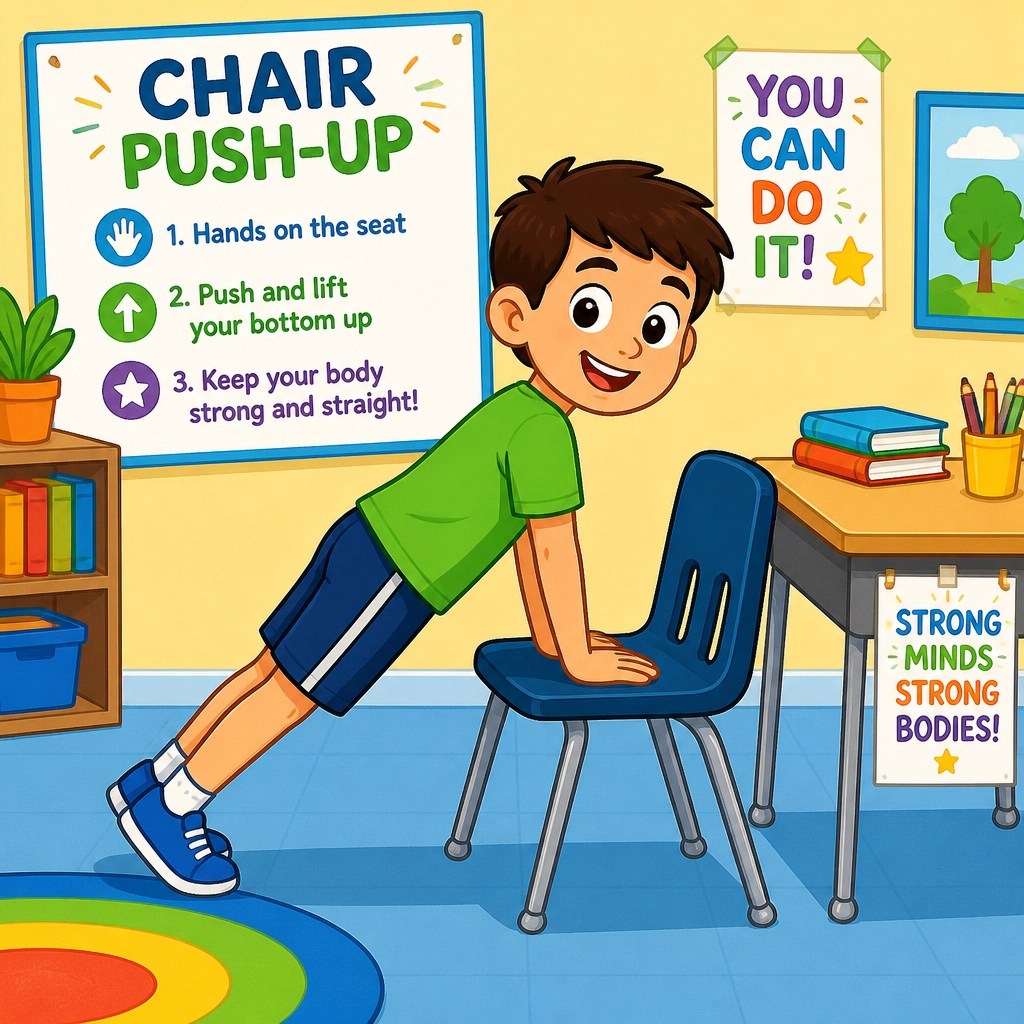
2. Wall Pushes
If your child is feeling restless, a "wall push" is a great way to burn off steam without leaving the room. Have them stand facing a wall, place their palms flat against it, and push as hard as they can for 10 seconds. It’s a great way to reset before a big test.
3. Animal Walks
Need to transition from the classroom to the library? Instead of just walking, encourage a "Bear Walk" (hands and feet on the floor) or a "Crab Walk" (belly up, walking on hands and feet). These movements provide intense heavy work that calms the mind.
4. Classroom "Helper Jobs"
Work with your child’s teacher to create "heavy work" chores. Carrying a stack of books to the office, moving chairs at the end of the day, or pushing a supply cart can provide the sensory input your child craves while making them feel like a valued classroom leader.
5. Desk Presses
This is a "stealth" move for when your child needs to stay quiet. Have them press their palms together as hard as they can, or push their knees up against the underside of the desk. No one even has to know they are working on their regulation!
Deep Pressure for Calming
Deep pressure is often described as feeling like a firm hug. It helps decrease the "fight or flight" response and promotes a sense of safety and calm.
6. Therapy Putty or Stress Balls
Keeping a small container of therapy putty or a firm stress ball in their desk gives your child a productive way to fidget. The resistance of the putty provides both heavy work and deep pressure to the hands, which can improve focus during listening time.
7. Weighted Lap Pads
A small, weighted lap pad (usually about 2–5 lbs) provides constant deep pressure while your child is doing seated work. It acts like an anchor, helping them feel grounded and less likely to "wiggle" out of their chair.
8. Shoulder Squeezes
With your child’s permission (and the teacher’s help), a firm, slow squeeze on the shoulders can provide an immediate sense of calm. You can teach your child to give themselves "self-hugs" by crossing their arms and squeezing their own upper arms firmly.
Just Breathe: Tools for the Nervous System
When we are stressed, our breathing becomes shallow and fast. Teaching your child how to control their breath gives them a tool they can use anywhere, from the school bus to the cafeteria.
9. Dragon Breath
This is a fun way to practice deep exhalation. Have your child breathe in deeply through their nose, then open their mouth wide and "blow out the dragon fire" with a long, forceful exhale.
10. Lazy 8 Breathing
Have your child draw a figure 8 (lying on its side) on a piece of paper or in the air. As they trace the first loop, they breathe in. As they trace the second loop, they breathe out. This rhythmic movement combined with breathing is highly organizing for the brain.
11. Pinwheel Breathing
If your child is a visual learner, a small pinwheel can help. The goal isn’t to make it spin as fast as possible, but rather as long as possible. This encourages a slow, steady exhale that tells the nervous system it’s time to relax.
Sensory Breaks and Active Sitting
Sometimes, the best way to stay calm is to move. Incorporating movement breaks into the school day can prevent a "sensory meltdown" before it starts.
12. The "Calm Corner"
Many classrooms in the Kansas City area are now incorporating sensory-safe spaces. A "Calm Corner" with a beanbag, soft lighting, and noise-canceling headphones gives your child a place to retreat if the environment becomes too loud or chaotic.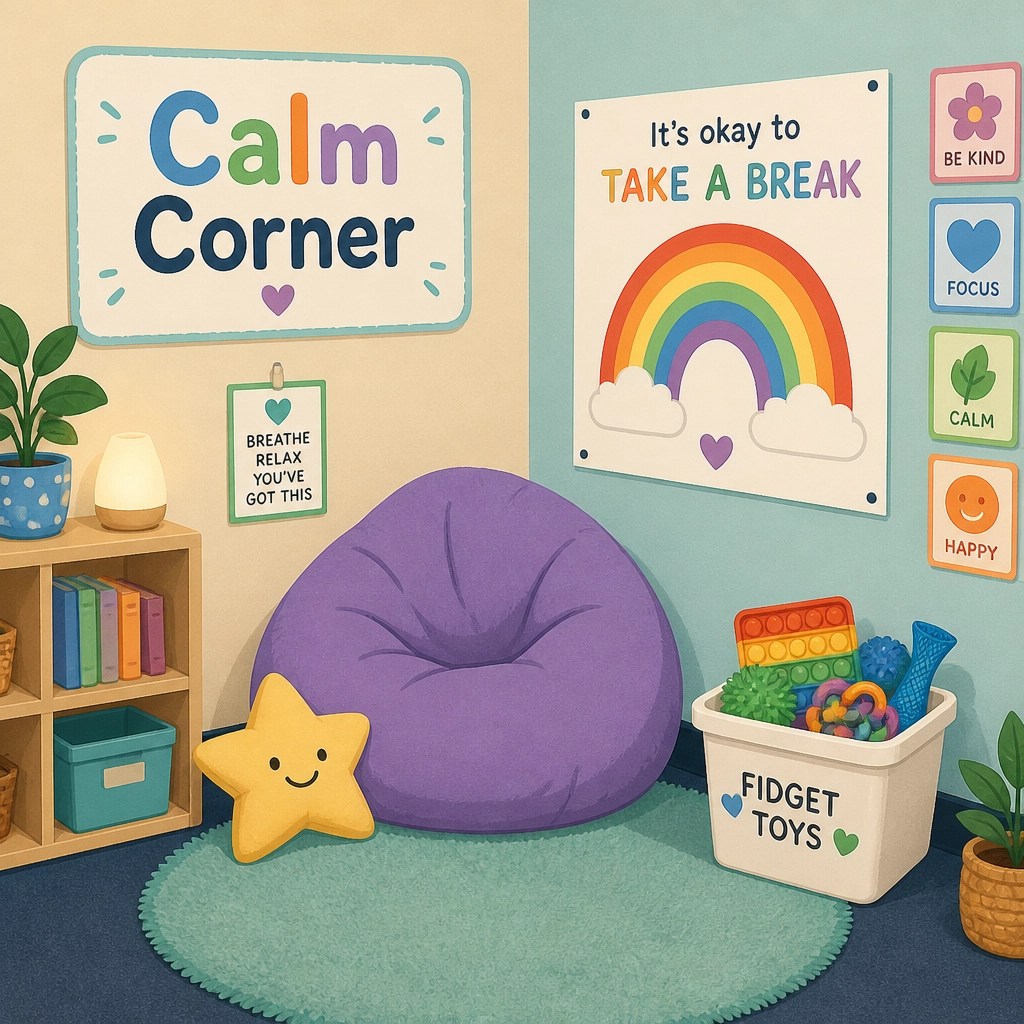
13. Wiggle Cushions
An inflatable wiggle cushion allows your child to move while they sit. It provides the "vestibular" (balance) input they need to stay alert, without requiring them to get up and walk around.
14. Scheduled Movement Breaks
Don’t wait for a struggle! Work with the school to schedule a 2-minute movement break every 20 minutes. A quick round of jumping jacks or a lap around the hallway can reset your child's focus and keep them on track.
15. The "5-4-3-2-1" Grounding Technique
This mindfulness activity helps kids get out of their heads and back into their bodies. Ask them to notice:
- 5 things they can see
- 4 things they can touch
- 3 things they can hear
- 2 things they can smell
- 1 thing they can taste (or one good thing about themselves!)
Why Professional Support Matters
While these activities are fantastic "in-the-moment" tools, they are just one piece of the puzzle. Every child’s sensory profile is unique. What calms one child might actually over-stimulate another.
That is why a professional evaluation is so important. At Dr. Danielle’s Developmental Services, we don't just give you a list of exercises; we create a personalized plan tailored to your child's specific needs. Whether you are looking for occupational therapy in Mission, KS or need a developmental screening to better understand your child's behavior, we are here to support your family.
Our team, led by Danielle Yeager, OTD, OTR/L, specializes in helping kids maximize their success at home and school. We take a family-directed approach, meaning we work with you to find solutions that fit your lifestyle and your child's personality.
Take the Next Step
You don't have to navigate these sensory challenges alone. If you've noticed your child struggling to stay calm or focused at school, let's talk. We serve families across the Greater Kansas City Area, providing expert care in a friendly, casual environment where your child can thrive.
Ready to help your child find their calm?
Contact us today to schedule an evaluation or call us at 816-401-8309. Let’s work together to give your child the tools they need for a successful school year!